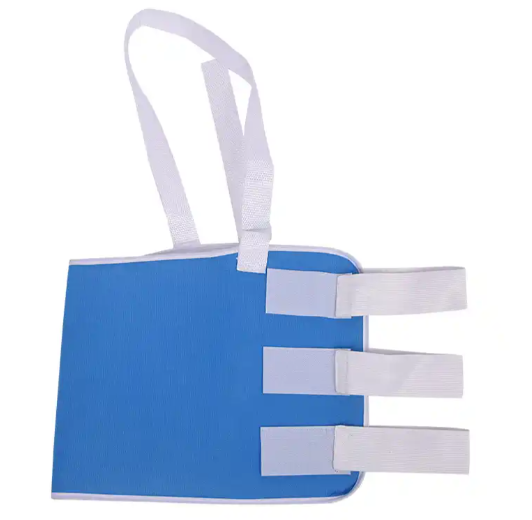
Rehabilitation Rib Belt
The rib belt is mainly used to stabilize the thoracic cage and relieve pain. It is suitable for a variety of chest wall injury scenarios and postoperative recovery periods.
Typical Symptoms of Applicable Patients
a. Single or multiple rib fractures without obvious displacement: Severe local pain that gets much worse when breathing, coughing or turning over the body.
b. Chest wall soft tissue contusion and intercostal muscle strain: Obvious pain when pressing the injured area, with strong pulling sensation during deep breathing or chest expansion movements.
c. Acute attack of costochondritis: Swelling and pain in the sternocostal joint area. The symptoms get worse when pressing the site or taking deep breaths.
d. Recovery period after thoracoscopic or thoracotomy surgery: Obvious pulling pain at the incision site, making patients afraid to cough and expulate sputum normally.
e. Spontaneous rib pain caused by senile osteoporosis: Dull pain on the chest wall occurs even with slight movements, and the stability of the thoracic cage decreases.
Practical Functions of Wearing a Rib Belt
a. Stable fixation: The elastic compression wraps the thoracic cage, limits abnormal movement of ribs, and maintains relative alignment of the fracture ends.
b. Significant pain relief: It disperses local pressure, reduces the pain sensitivity of nerve endings, and enables patients to complete normal breathing.
c. Lower complication risks: Reduces the chance of pneumothorax and hemothorax, and avoids atelectasis and lung infection caused by patients’ fear of coughing.
d. Healing assistance: The stable mechanical environment can speed up callus formation, and shorten the recovery cycle of fractures and soft tissue injuries.
Safety Instructions:
a. For severely displaced fractures, open fractures, or confirmed pneumothorax and hemothorax, rib belt conservative treatment alone is not sufficient.
b. The proper tightness is defined as leaving space for 1 to 2 fingers to slip in. Too tight a belt will restrict breathing, while too loose a belt cannot perform effective fixation.
c. The regular wearing period is 2 to 4 weeks. Long-term continuous wearing may lead to chest wall muscle atrophy.
Please don’t hesitate to contact Medroot Medical for more information.