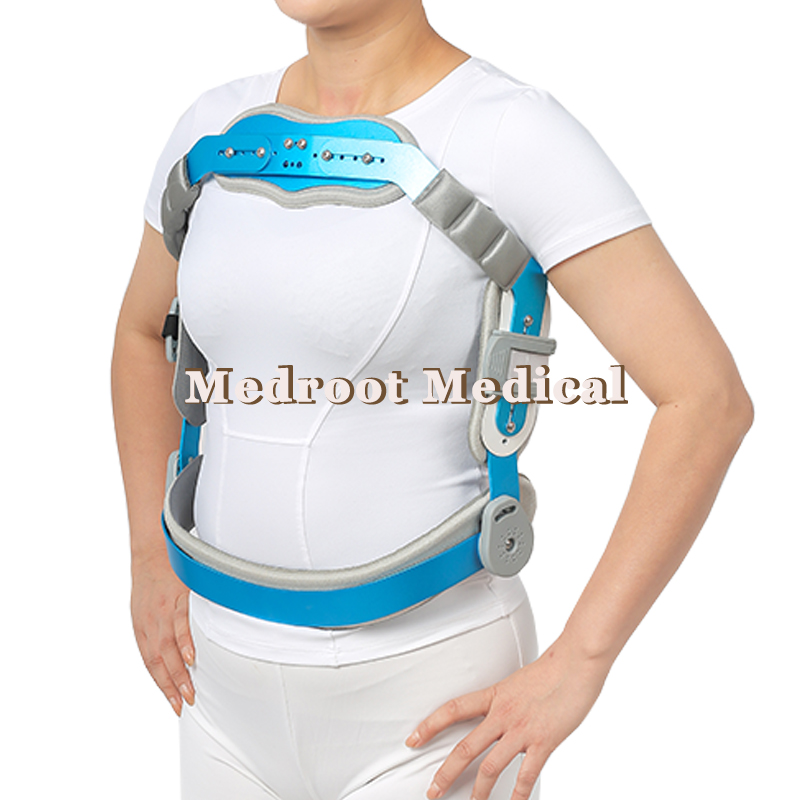
Short Guide to Spinal Hyperextension
Don’t let overarching hurt your waist quietly.
You may not notice that many people unconsciously push their waist backward when standing, or walk with a habitual slouched back and sticking belly. These small habits are actually signs of mild spinal hyperextension.
Among office workers, 1 in 5 people have different levels of thoracolumbar hyperextension posture issues. The rate is even higher among dancers and gymnasts who often do backward bending moves. Most people do not notice the problem at first, until their waist aches after standing for half an hour, or they easily twist their waist when bending down to pick up things.
Long-term spinal hyperextension puts extra constant pressure on the small joints of the lumbar spine. This slowly causes wear, limited movement, and even nerve compression in severe cases, making daily commutes and housework hard to finish.
The spinal hyperextension brace is a practical tool for this problem. It uses a three-point support structure to pull the overextended spine back to its normal curve. It stops dangerous overarching moves and prevents secondary injury to the lumbar spine in daily activities. It also helps relax tight waist muscles, eases chronic soreness, and acts like a quiet reminder to help you break bad posture habits.
Remember, the spinal hyperextension brace is only an aid in rehabilitation, not a magic fix that works the second you put it on. Follow your doctor’s advice to adjust its tightness and wearing time. Do not wear it 24 hours a day, or your waist muscles will get weaker. Pair it with simple back muscle exercises, and you can keep your spine healthy in the long run.
Please don’t hesitate to contact Medroot Medical for more information.